
'Modi wants to be pragmatic -- acknowledge the problem of Pakistan and that full reconciliation is essentially a non-starter, but at the same time grab the low-hanging fruits (such as trade) to put things on a more even keel, to engender enough stability in the relationship to allow him to focus on other priorities.'


'We should hit Pakistan, continue to prepare for surgical strikes, continue to punish Pakistani posts in the proximity of the LoC and we should start adopting counter terrorist measures.' 'That should be India's action without escalating it to a full-fledged war.'
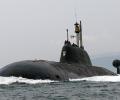
'We have been found seriously wanting in addressing our undersea warfare capability and China's emergence is a cause for concern.'
.jpg)
The Indian Army must be given a free hand to retaliate punitively at one or more places of its choosing on the LoC. The aim should be to cause maximum damage to the forward posts of the Pakistan army, particularly those through which recent attacks have been launched, thereby raising the cost for the army, says Gurmeet Kanwal.

'The Modi regime, after experimenting with its own versions of neighbourhood policy for 18 months, has now reached the exact stage where the Manmohan Singh government had left it in so far as our Pakistan policy is concerned,' says former senior RA&W officer Vappala Balachandran.

While nuclear engineers cheer KNPP's first full operation, on nine other sites which house atomic reactors, scientists spend sleepless nights.

Industries with the highest number of top-rated companies at risk were hospitality/travel, media and entertainment, retail, financial services and consumer goods/manufacturing

There are rumours that Ajay Singh who previously headed SpiceJet may get an investor to bail out the airline of dire consequences.

IMAGES of the all the action from Day 2 of the Australian Open played at Melbourne Park on Tuesday

What is Change really like in Bihar? Once seen as India's basket-case, what is its turnaround story like? Archana Masih reports from India's other most talked about state.

The US foreign and security policy establishment, says Ambassador M K Bhadrakumar, apprehends that Trump may compel them to exorcise the 'unipolar predicament', and bring foreign and security policies to reflect the desires and priorities of the American public.
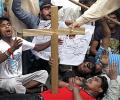
Two suicide bombers rammed into the All Saints Church in the Kohati Gate area of Peshawar, Pakistan, when Prime Minister Nawaz Sharif was on his way to New York to attend the United Nations General Assembly session.
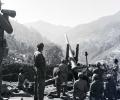
Fifty years ago, India and Pakistan fought a short but bloody war. The author finds out how Sainik Samachar, the defence ministry's journal, reported it.

One hopes the higher courts take the extraordinary steps needed to secure justice for the victims. The Gujarat carnage demands nothing less because of its unique nature and sponsorship by the State, argues Praful Bidwai.

Business reacted with caution to the reforms of 1991, and demanded protection from multinationals and imports. Twenty-five years later, traces of that demand can still be found, reports Bhupesh Bhandari.

The Pampore attack 'has the stamp of LeT written all over it.'
'They are exactly like the so-called fidayeen of the 1999-2003 phase, when J&K witnessed a surge in suicide attacks on various important garrisons,' says Lieutenant General Syed Ata Hasnain (retd), who served as the General Officer Commanding 15 Corps in Kashmir.

The Sochi Winter Olympics are meant to be Vladimir Putin's crowning achievement as Russian leader but are in danger of becoming a symbol of his country's problems.

Finance Minister P Chidambaram, while addressing the Carnegie Endowment for International Peace on "Recapturing India's Growth Momentum" in Washington on Thursday, said that the leading think tank need not launch an initiative to explore how India will vote in 2014, declaring that the Indian polity will vote the Congress back into power.
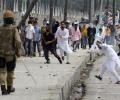
'The so-called separatists are representatives of Pakistan. They get paid from Islamabad for propagating that country's policy and conniving in her ploy of accession of Kashmir to Pakistan.'

The Mars mission is overwhelmingly irrelevant to space science and won't advance the frontiers of knowledge. It will divert attention from the real technological challenges facing the Indian space programme, and will further distort our science and technology priorities, says Praful Bidwai.

'We don't know what the reasons were that we gave back the Haji Pir Pass which was strategically very important. Today the entire infiltration into Kashmir takes place from that area. If we had retained that post that we had captured, things could have been different.' 'A lesson we need to learn is if you start losing the gains of war at the negotiating table, they become a disincentive for future wars,' says Lieutenant General D B Shekatkar (retd), reviewing the lessons from the 1965 War.

It is rare for communal riots to spread to rural areas. The UP riot is the first time after the September 1969 Gujarat riots that a rural area have been affected. Electoral politics which divide society in majority/minority, going on since the early 1990s, is a major contributing factor to this heightened tension between communities, says Colonel (retd) Anil Athale in the first of a two part series.

A round-up of Ranji matches played across India on Saturday
'The Mansoor Taliban is really an extension of the Haqqani Network which in turn is an instrument of the ISI. With Ashraf Ghani ready to dance to Pakistani tunes and with the Haqqani Network becoming part of the Afghan government, Pakistan is all set to see the fruition of its strategic policy,' says Sushant Sareen.
Kashmiris hope that India and Pakistan can find a lasting solution to what many call the Kashmir 'problem'.

'India cannot expect to be insulated from the crisis. Europe is India's biggest trading partner with two-way trade of E72.5 billion or Rs 530,000 crore last year,' says Paranjoy Guha Thakurta.

The founder of the Republican Hindu Coalition first attracted attention in the US as the "Punjabi tycoon" who was a huge supporter of Narendra Modi in the US. 'He will be best for India. There is no better ally for the US than India in the region,' Shalabh Kumar tells Rediff.com's Vaihayasi Pande Daniel.

The AAP has adopted policies in an ad hoc manner, without thinking them through or deriving them from a broader framework. This must change if the AAP is to become a credible alternative, says Praful Bidwai.

'Small bands of terrorists believe they can destabilise superpowers if they are ready to become martyrs.' 'Since the road to paradise is under the shade of swords, it is a win-win situation for those ready to die for the cause of Allah.'

Do Modi's foreign visits actually serve India or they nothing more than expensive tools for domestic positioning and image-building, asks Shehzad Poonawalla.

The jury is still out on whether the Obama-Sharif summit managed to repair the trust deficit and mutual suspicions. But if pleasantries and cordiality was the measure of this summit, it receives a resounding A+ grade, says Aziz Haniffa

The India that needs strategic alliances, defence cooperation and engaging meaningfully with neighbouring countries is quietly moving ahead with confidence, says Tarun Vijay
'No one talks about the Mumbai riots anymore, though like Delhi 1984, the guilty have not been punished. In Gujarat, many powerful leaders of the state's ruling party are in jail for their role in the riots... In Mumbai, only one politician of the Shiv Sena, a former MP, was convicted of hate speech, along with two other Shiv Sainiks, one of whom was a corporator and the other a junior functionary... So why the apathy? Could it be because despite these statistics and the widely-publicised findings of the Srikrishna Commission, what remained in public consciousness was the violence by the Muslims, thanks to a highly efficient Sena propaganda machine? There's no demand for it, but would an SIT probe into the closed cases of the Mumbai riots help today?' The fadeout of Mumbai's riots from public debate can be called a triumph of the communal State, argues Jyoti Punwani.

A very delayed and subdued reaction, at a time when the non-aligned world had expected a big country like India to come out in support of rights and justice. It was yet another example of the mealy mouthed approach that has come to define Indian foreign policy, says Seema Mustafa.
'Greenpeace has been brutal in targeting both India and the Manmohan Singh government. The push to go after Indian coal is driven by its long-term agenda. What is surprising is that China has not been meted out the same treatment, despite the fact that the rise of China as an economic power has been built around generating power from coal. 'Being richer and more affluent, yet far less democratic, there is less room for an NGO such as Greenpeace to drive home a complicated global agenda, so there is more of a tendency to go along with anything the Chinese offer despite China being the biggest by far with regard to coal use. But for India, it reserves tougher prescriptions, notably for its middle class, says Srinivas Bharadwaj.

India Inc has few leaders who are likely to grab headlines in 2015.

While Iraq and Afghanistan top the Global Terrorism Index 2014 as the most terror-affected nations, India has been ranked number six.

Two hundred years after George Stephenson built the steam-powered Blucher, Open Knowledge pays tribute to 200 years of rail transport.

Several factors seem to have corrected in India in the past six months, says the president of New Development Bank.
